EPP hosts 2026 Technology, Management, and Policy Graduate Consortium
Hillary Roman
Jun 25, 2026
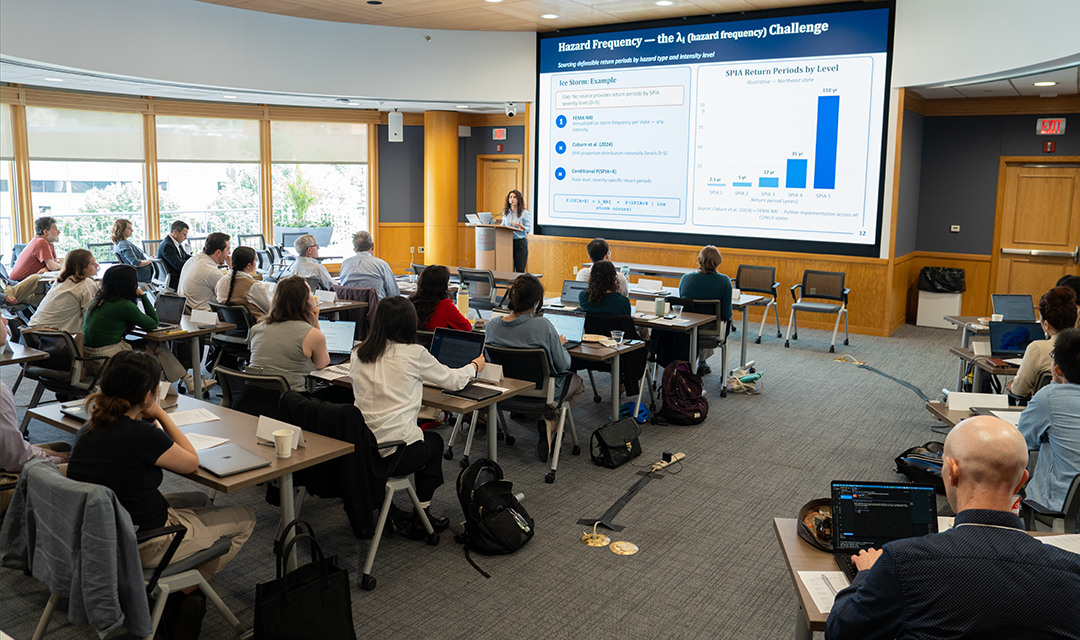
2026 Technology, Management, and Policy Graduate Consortium
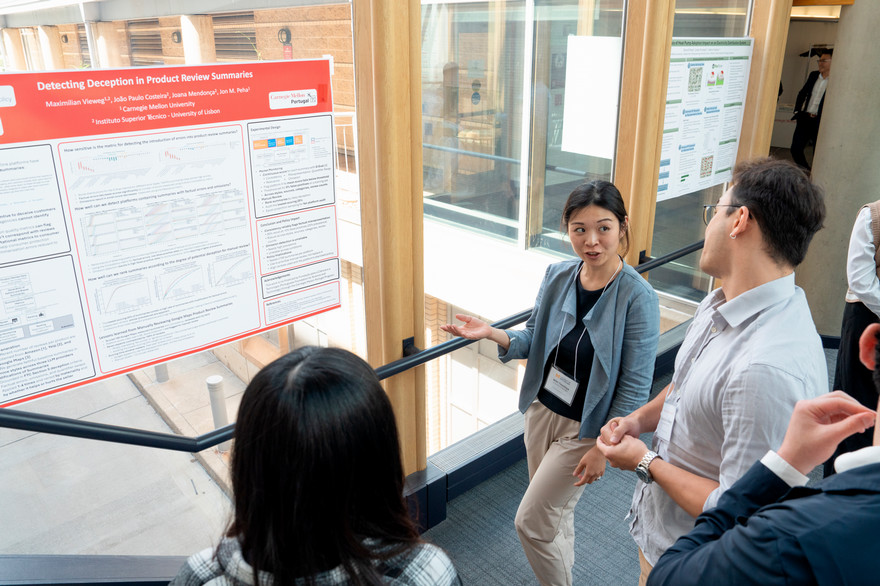
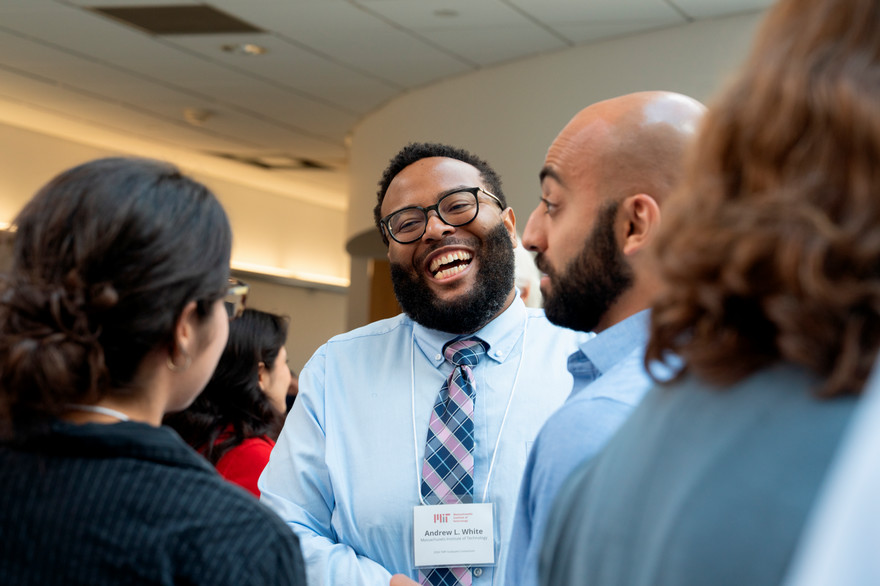
From June 14 to June 16, the Department of Engineering and Public Policy at Carnegie Mellon University hosted the annual Technology, Management, and Policy (TMP) Consortium. The consortium brings together graduate students and faculty from leading academic programs focused on interdisciplinary research on the societal, economic, and policy dimensions of technological change. Designed to strengthen the global technology and policy research community, the event provides a forum for students to present their work, receive feedback from peers and faculty, build professional networks, and engage in discussions on emerging challenges and opportunities in science, technology, and society.
Student presentations at this year’s consortium covered a wide range of global challenges organized into seven sessions
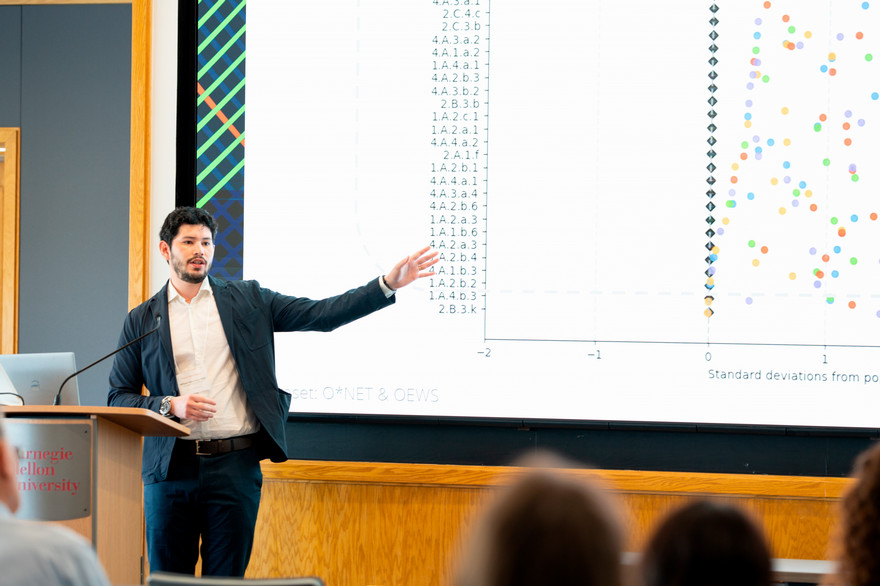
Grid resilience and climate hazards
- Ryan Chen, Carnegie Mellon University: “Large-scale Resilience Planning for Wildfire-Prone Electricity Systems”
- Easha Rajalaxmi Vivesh, George Washington University: “Scenario-Based Transmission Expansion under Wildfire Risk and Emission Policies"
- Maryam Hamidi, Carnegie Mellon University: “From Single-Hazard to Multi-Hazard Planning for Electric Distribution Systems”
- Michelle Wang, Carnegie Mellon University: “Workforce Bottlenecks for Data Center and Grid Expansion"
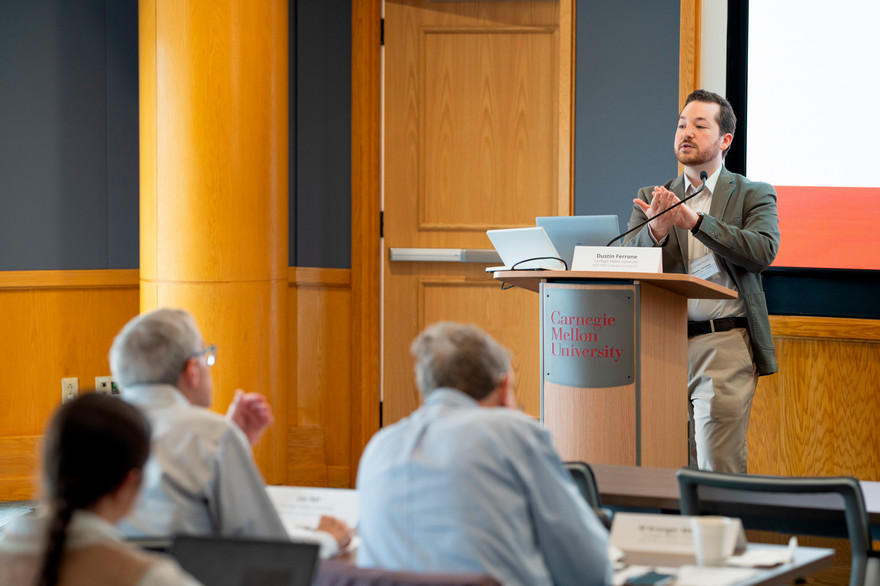
AI, technology, and the future of work
- Dustin Ferrone, Carnegie Mellon University: “Signals of Firm-Level AI Adoption"
- Wilson Martínez Diaz, Carnegie Mellon University: “Skill Biased or Skill Agnostic: Hirings in the US Semiconductor Industry”

Electricity markets, regulation, and environmental compliance
- Victoria Dinov, Stanford University: “Quantifying the Retirement Cliff and Emissions Trade-Offs of the Aging U.S. Power Fleet”
- Ibrahim Ahmed, George Washington University: “Examining the Illusion of Chaos in Power Markets”
- Andrew L. White, Massachusetts Institute of Technology: “Navigating the Energy Transition at the Urban Scale Through Peaker Plant Retirement”
- Kelly Wu, Massachusetts Institute of Technology: “Methane Emissions Attribution to Oil and Gas Production Using Satellite Imagery and Econometric Methods”
Equity, health, and community engagement
- Anny Mireilles Sarea de Mendonça, Universidade do Porto: “From Indicators to Impact: A Systematic Review of Evaluation Metrics for Public Health Policy in Low- Resource Settings”
- Brissa Acevedo, Universidade do Porto: “Energy Justice and the Infrastructure of Demand: Community Preferences for Equitable Solar Farm and AI Data Center Development”
- Stacy Godfreey-Igwe, Carnegie Mellon University: “Extreme Heat on Residential Electricity Demand: A Case Study in a Hot-Humid Climate”
- Yujin Seo, Carnegie Mellon University: “Mapping the Impact of Drug Shortages: Market Structure and Geospatial Socioeconomics”
Industrial decarbonization: steel, heat, and transportation
- Dimitri Saad, Stanford University: “The Supply and Demand of Industrial Process Heat in the U.S.”
- Judy Sihyon Park, Carnegie Mellon University: “Climate, Air Quality, and Distributional Impacts of Transitioning Away from Coal-Based Steel Production”
- Andrew S. White, Massachusetts Institute of Technology: “Climate and Air Quality Impacts of Intercity Passenger Rail in the United States”
- Miki Tsuchiya, University of Michigan: “Slow Steaming for Trucks: Automation Changes the Trade-Off Between Productivity and Emissions”
Supply chains, critical materials, and industrial policy
- Junlin Zhou, Carnegie Mellon University: “How Reliable are Critical Mineral Trade Flow Estimates for EV Battery Supply Chains?”
- Katy Yu, Carnegie Mellon University: “Differentiated Opportunities and Constraints in U.S.-China Scientific Collaboration”

Technology governance, risk perception, and science policy
- Jonathan Miller, Penn State University: “Sensemaking Quality: Three Measures for Detecting Narrative Capture”
- Hannah Rajput, Massachusetts Institute of Technology: “When Identifying Risks Creates New Ones: Harms of Socioeconomic Risk Indicators”
- Ariel Zych, Carnegie Mellon University: “Framing Effects on Public Perceptions of an Emerging Red Blood Cell Modification Technology”
- Emaan Bilal Khan, Massachusetts Institute of Technology: “Safety Drift After Fine-Tuning: Evidence from High-Stakes Domains”
- Elena Chechik, Georgia Institute of Technology: “From Open Science to Scientific Isolationism: A Conceptual Framework for Science Policy Analysis”
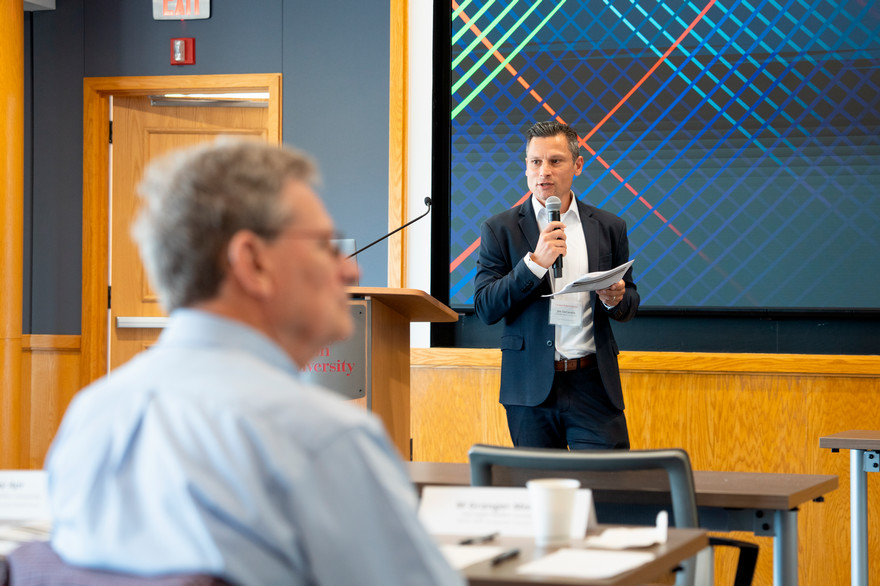
2026 marks the third year Carnegie Mellon University has hosted TMP.